Our dry lining services include the following

Dot and dab plasterboard installation
Plasterboard can be fixed directly to masonry using adhesive dabs, creating a smooth, true surface with minimal loss of room space. This method is well suited to solid brick or block walls where the background is uneven, tired, or difficult to decorate, and it is often chosen when walls need straightening quickly while still delivering a clean, modern finish. Because the boards are set off the wall on the adhesive, minor inconsistencies in the masonry can be taken up during installation, helping achieve a flatter line across the room without extensive preparation. It is a practical option for refurbishments where time and disruption need to be controlled, and, where appropriate, allowances can be made for services and detailing so the finished surface remains crisp, consistent, and ready for final decoration.
Metal stud partition walls
Metal stud systems are a versatile option for creating new rooms, altering layouts, and forming service zones in both domestic and commercial settings. They are commonly used for straight internal partitions, boxed sections around pipework, and tidy framework zones where precision matters, with lightweight components that still provide excellent stability once installed. The system supports a wide range of specifications, including improved acoustics, fire-rated build-ups, and reinforcement where heavier fixtures need secure fixing points. With accurate setting out, door openings, corners, and junctions can be formed cleanly, helping the finishing stages run smoothly and ensuring the final walls look sharp, straight, and consistent.
Timber stud walls and linings
Timber framing can be used for partitions and wall linings, particularly where traditional methods, specific fixing requirements, or site conditions make timber the preferred choice. It is often useful in older properties where working with existing structures benefits from a material that is easy to adapt around irregular openings, sloping lines, or uneven backgrounds, while also providing reliable fixing points for joinery and wall-mounted items. A timber framework can create a service void for cables and pipework, helping keep the finished face uncluttered, and it also allows insulation to be introduced where needed without overcomplicating the build-up. When installed with good alignment and correct spacing, timber studwork provides a dependable base for plasterboard and a finish that remains practical, durable, and easy to detail neatly.
Independent wall linings
Where an external wall needs improved thermal performance, or where masonry is uneven and difficult to correct, an independent lining system can be installed to create a new internal face. This approach uses a separate frame that is not reliant on the existing wall being straight, making it effective in properties with bowed masonry, patchy backgrounds, or deteriorated internal surfaces, while still producing a flatter, cleaner wall plane. The framing zone can accommodate insulation to help reduce heat loss and improve comfort, which is particularly beneficial on exposed elevations and rooms that struggle to hold temperature. It can also provide a neat route for service runs and consistent fixing positions, supporting a finish that suits the building type, room use, and decorative outcome you want.
Insulated plasterboard systems
Insulated boards are used to improve thermal efficiency while keeping installation relatively straightforward, combining plasterboard with a bonded insulation layer to reduce heat transfer through external walls. This can be a space-conscious way to upgrade comfort without building out a separate framed lining, making it suitable where room dimensions are tighter but performance still needs improvement. By increasing the temperature of internal wall surfaces, insulated plasterboard can also help limit condensation on colder sections of wall, especially in living areas and bedrooms where steady comfort matters. When correctly specified for the property and detailed properly at edges, openings, and joints, the system contributes to improved overall energy performance while still delivering a smooth, ready-to-finish surface.
Ceiling dry lining and suspended ceiling systems
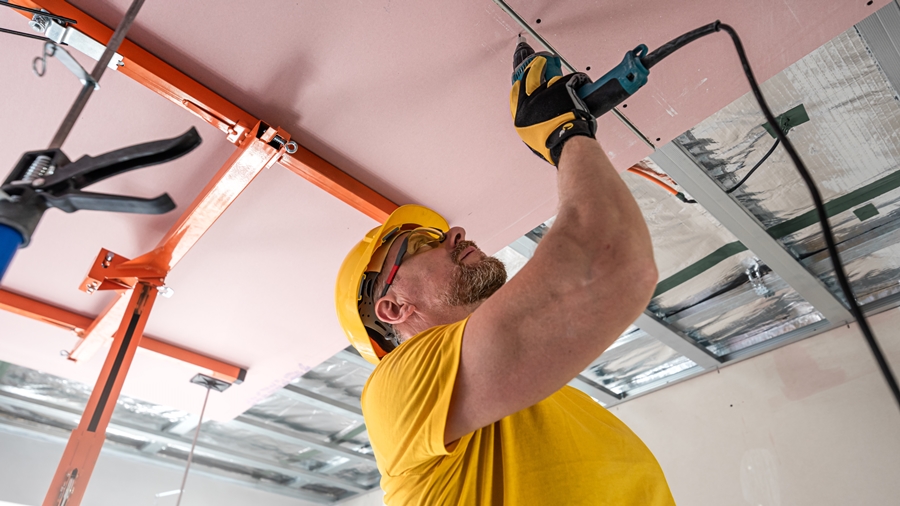
Dry lining can be used on ceilings to create a crisp, level finish, conceal defects, and provide a clean base for decoration, particularly where existing ceilings are uneven, cracked, or visually tired. It is also useful when the room layout is changing and new lighting, extract routes, or other service runs need to be integrated neatly without spoiling the finished appearance. Where required, suspended ceiling systems add further flexibility by creating a controlled void for wiring and pipework, improving acoustic performance between floors, and allowing additional insulation to be included as part of the build-up. In certain settings, access points can be incorporated to support future maintenance, resulting in a ceiling solution that balances appearance, performance, and practicality.
Tape and joint finishing
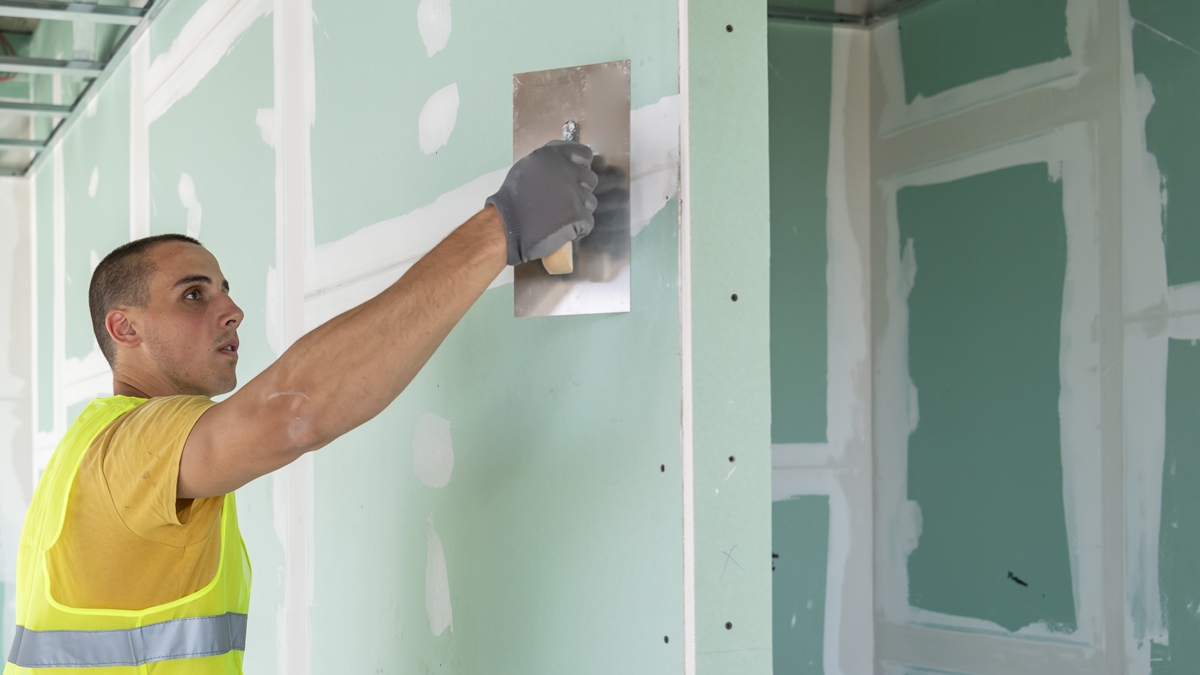
For a clean decorative finish without a full skim coat, boards can be taped and jointed using reinforcing tape and jointing compounds to refine joints, angles, and fixing points, creating a smooth surface ready for paint. This method is widely used in new builds and refurbishment projects where speed, cleanliness, and cost control are important, while still achieving a professional finish when carried out properly. It works particularly well when plasterboard has been installed accurately, with straight framework lines and well-aligned board edges, as this reduces the amount of build-up needed at joints and improves the final look. With careful sanding and checking under good lighting, the completed surface can appear sharp and even, making it a strong alternative to skimming in many interiors.
Fire and moisture resistant board installations
Different rooms require different board types, particularly in kitchens, bathrooms, utility areas, and locations where enhanced fire protection is required, so selecting the correct board is key to long-term performance. Moisture resistant boards are commonly used where humidity and intermittent water vapour are present, helping maintain stability behind finishes such as tiles and specialist paints, while good detailing around penetrations and ventilation supports the overall result. Fire resistant boards are used where improved protection is needed for partitions, ceilings, or boxed service runs, supporting safer compartmentation in line with the property’s design and any relevant regulatory requirements. Using the right board and installing it to the correct specification ensures the lining performs properly for the room conditions without compromising the quality of the final finish.